

“making music was a way of creating our own space, a kind of protected, enclosed space where we could work, experiment and temporarily separate ourselves from everything happening outside.”
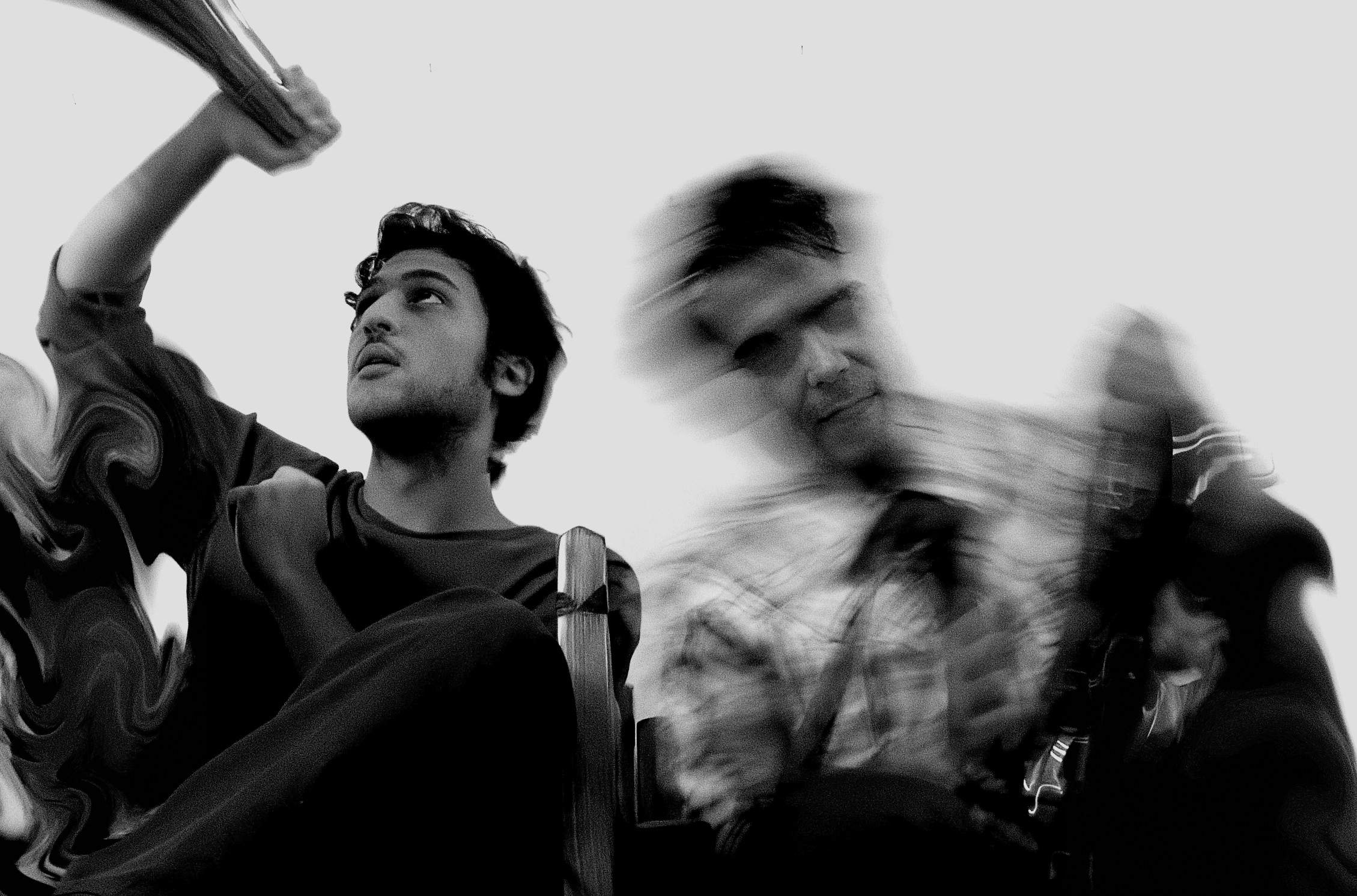
Recorded in Tehran more than a decade ago and left unfinished for years, We Were Here: Tehran 2011 documents a version of Ahoora that never reached its intended final form. Rather than rebuild the material from the present, the band chose to release it close to the way it was originally conceived. MIDEAST.ROCKS spoke with Tangshir about the album and the years surrounding its creation.
We Were Here: Tehran 2011 was recorded at a very specific moment in the band’s life and in the city around you. When you listen to those recordings now, what do they bring back about Tehran in 2010 and 2011?
It’s actually a very difficult question to answer. When I listen to those recordings now, I think they encapsulate a certain energy we had at the time, and also the way we were thinking about music, particularly the progressive elements, the structures and the freedom to move between different sounds.
Those were also very turbulent years in Tehran and in Iran, another period of turmoil in the country. I think some of that inevitably found its way into the mood and the sound of the album, even if we weren’t consciously trying to document it. At the same time, making music was a way of creating our own space, a kind of protected, enclosed space where we could work, experiment and temporarily separate ourselves from everything happening outside.
When I hear the album now, I think I hear both of those things: the tension of that period and our attempt to build a space of our own within it.
The album was originally meant to include vocals, but that version was never completed. Do you still remember what those songs were supposed to say lyrically, and why did it feel right to release them instrumentally now?
Yes. A couple of the songs already had lyrics, although we never reached the point of recording the vocals because I left Iran before that happened. I still remember the general mood of what we were writing. There was a certain melancholy to it, which I think is still present in the instrumental music.
Releasing the album now felt important because it was an unfinished chapter. Ahoora had already made three albums, each exploring somewhat different musical territories, and then everything stopped rather abruptly. Despite the technical limitations of these recordings, and despite their incompleteness, they capture a particular moment in the life of the band, which was itself part of a very interesting period in the Iranian underground music scene.
After all these years, I felt that this chapter deserved some kind of closure. Not by trying to complete or reconstruct it from who we are today, but by allowing it to exist as it was. For me, it has value especially as a document of a particular place and time.
“we had almost no possibility of touring in Iran or playing regular official concerts.”
Ahoora had already spent years working inside Iran’s underground rock and metal scene by the time these sessions were recorded. How much did censorship, limited access to venues and the wider political climate shape the way the band worked at that time?
Very much. I think the history and the path of Ahoora were inevitably shaped by those conditions. One of the biggest differences was that we had almost no possibility of touring in Iran or playing regular official concerts. We didn’t have that continuous, direct relationship with an audience that normally becomes part of a band’s development.
I sometimes think that if we had been able to play live regularly, our musical evolution might have been quite different, and perhaps even slower. We moved quite rapidly from something closer to power and thrash metal towards progressive metal, and later into a mixture of post-rock, electronic music, trip-hop and metal. We were constantly experimenting and changing.
It’s difficult to know what would have happened under different circumstances, of course, but I think the lack of access to a public space gave us a strange kind of isolation. In some ways it was limiting, but perhaps it also gave us the freedom to keep changing without having to respond to an established audience.
You chose to preserve the original recordings, including their limitations and unfinished character. What was it like hearing those sessions again after so many years, and was there anything you were tempted to change?
Considering the limitations we had at the time, I was actually quite satisfied when I listened to the recordings again. The digital revolution had already begun, of course, but access to good recording equipment, software and production tools was still much more limited, especially for us in Iran. Given those circumstances, I think the recordings have held up quite well.
At one point, I considered changing some of the structures, particularly sections that had originally been conceived to accommodate verses or vocals that were never recorded. But eventually I decided not to do that. The more I worked on it, the more important it became to preserve the music as closely as possible to what we had imagined at the time.
I didn’t want to impose who I am musically today on something we made fifteen years ago. The point was to preserve who we were then, emotionally, energetically and musically, and let the limitations and unfinished aspects remain part of that document.
The title We Were Here feels especially loaded for an archival release from a band whose members eventually moved in different directions. What does that title mean to you now, fifteen years after the music was recorded?
I think the title is a kind of recognition of a path and of a part of our lives. Ahoora was, for many years, probably the most important thing in our lives. We put an enormous amount of effort and belief into it, and with the limited means available to us, we tried to make the best music we could.
Fifteen years later, We Were Here is a way of acknowledging that. We were part of that city, that particular moment and that underground music scene, and all of it became part of who we are. The fact that our lives eventually took us in different directions doesn’t diminish what that period meant.
So, for me, the title is quite simple. It’s an act of recognition, but also of closure: we were here, we made this music, this was part of our lives, and it deserves to have its place.
We Were Here: Tehran 2011 is available now on Bandcamp.

